Buying a Multi-Family in Rhode Island: The House-Hacking Guide (2026)
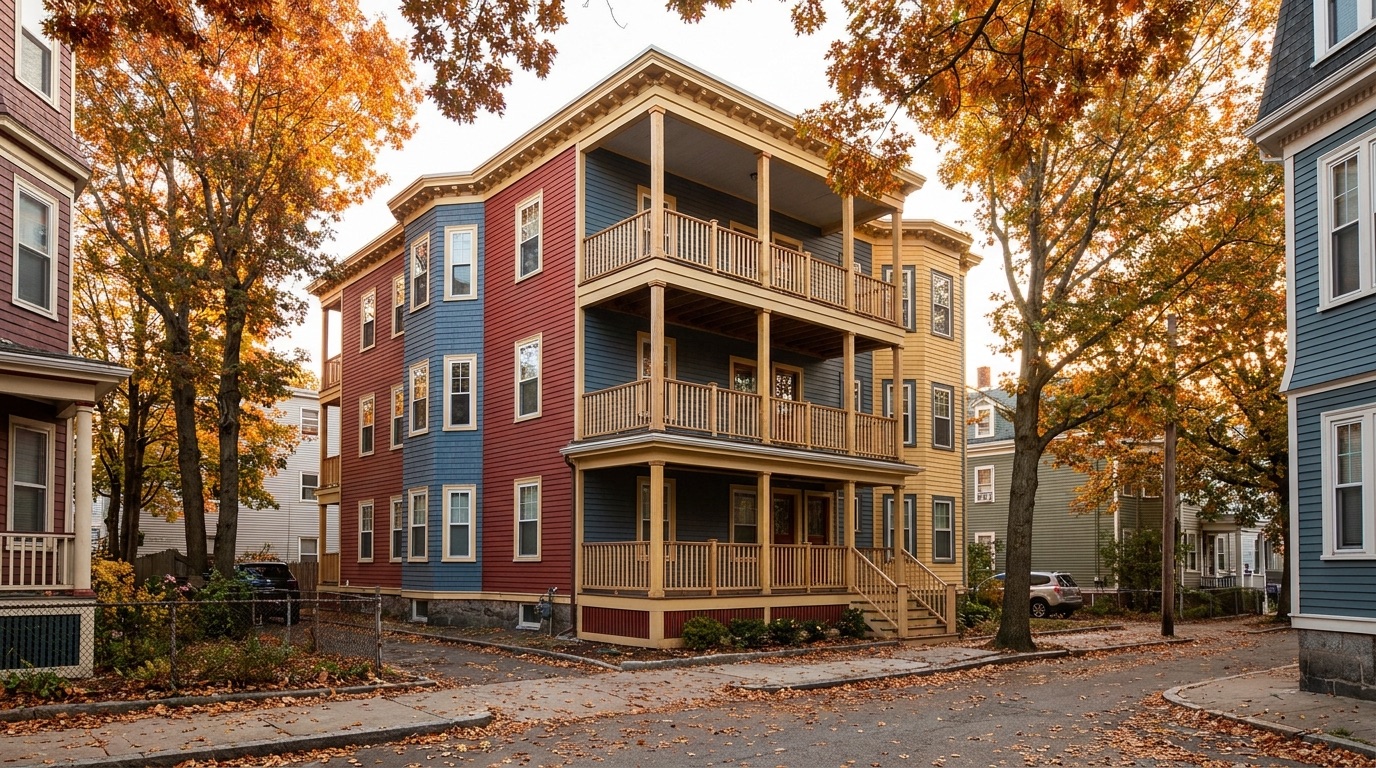
Here is the short answer, before anything else. Rhode Island is one of the best markets in New England for house-hacking a multi-family because we have an unusually deep supply of 2-4 unit buildings, the entry prices are lower than Greater Boston, and the neighborhoods that hold that housing stock (Providence, Pawtucket, Central Falls, Woonsocket, and nearby Fall River in Massachusetts) are dense, walkable, and full of tenants who want to rent there. When cheap-ish inventory meets steady rental demand, the math works. That is the whole thesis, and the rest of this article is me showing my work.
I am a Fathom Realty agent licensed in both Rhode Island and Southeastern Massachusetts, and I also run a digital marketing agency, so I look at numbers for a living. Helping clients buy multi-family homes has become one of the things I do most in RI. Let me walk you through how it actually works.
What "house-hacking" means
House-hacking is simple. You buy a small multi-family (usually 2, 3, or 4 units), you live in one unit, and you rent out the others. The rent from your tenants offsets your mortgage. In a good scenario your tenants cover most or all of your housing cost, and you live for very little (or in the best cases, close to free). You are the owner and you are also a resident, which changes the financing in your favor. More on that below.
The reason this strategy fits Rhode Island so well is the building stock. We were a mill-and-factory state, and the housing built for that workforce a century ago was multi-family by design.
The triple-decker market
If you drive through Providence, Pawtucket, Central Falls, or Woonsocket, you will see them everywhere. Three floors, one apartment per floor, a front porch stacked three high. These are triple-deckers (some people call them three-deckers), and they were built by the thousands across Rhode Island and the nearby Massachusetts mill cities like Fall River and New Bedford.
That history is your advantage today. You are not hunting for a rare property type. You are shopping in a category that is genuinely abundant here, which means more choices, more comparables, and more negotiating room than a buyer would have in a market where 2-4 unit buildings barely exist.
A few things to know about this stock:
- Most are older, often built between roughly 1890 and 1930, so age and condition matter a lot (I will get to inspections).
- Two-family and four-family buildings exist too, not just triple-deckers, and each unit count changes your financing and your management load.
- Layouts are often similar unit-to-unit, which makes them easy to rent and easy to compare.
The house-hacking math (an example)
Let me build an example so you can see the mechanics. These are illustrative assumptions, not a quote, not a guarantee, and not investment advice. Your real numbers will depend on the specific property, your loan, rates at the time, taxes, and insurance. I am using round figures and ranges on purpose.
Assumptions for the example:
- Purchase price: 500,000 dollars for a three-family.
- Down payment: 5 percent (owner-occupied), which is 25,000 dollars. Down payment ranges for owner-occupants can run lower or higher depending on the loan program and unit count.
- Loan amount: about 475,000 dollars.
- Estimated total monthly payment (principal, interest, taxes, insurance, and any mortgage insurance): assume a range of roughly 3,600 to 4,200 dollars. I will use 3,900 dollars as the midpoint for this example.
- Market rent per unit: assume 1,500 to 1,900 dollars. You live in one unit and rent the other two.
Now the house-hack:
- You occupy Unit 1. You rent Units 2 and 3.
- Two units at, say, 1,700 dollars each is 3,400 dollars per month in rent collected.
- Your total payment in this example is about 3,900 dollars.
- 3,900 minus 3,400 equals roughly 500 dollars per month that comes out of your pocket for housing.
Compare that to renting a single apartment in the same city, where you might pay 1,700 to 2,200 dollars a month and build zero equity. In the example above you are housing yourself for around 500 dollars while you own a 500,000 dollar asset, pay down the loan every month, and hold two rental incomes.
Now stress-test it, because I always do this with clients. What if one unit sits empty for a month? What if the roof needs work? What if taxes go up? A responsible plan sets aside reserves for vacancy, repairs, and capital items (roof, heating systems, and so on). A common rule of thumb is to budget a slice of gross rent for these, but the honest version is that older buildings need real reserves, so do not spend down to zero. If the deal only works when everything goes perfectly, it is not a deal.
Financing an owner-occupied 2-4 unit
This is the part that makes house-hacking accessible, and it is worth understanding clearly.
When you buy a 2-4 unit building and you live in one of the units, lenders treat it as owner-occupied, not as an investment property. That matters for two big reasons:
- Lower down payments. Owner-occupant programs, including FHA and various conventional options, generally allow much smaller down payments on 2-4 unit homes than an investor would need for the same building. An investor might need a large down payment. An owner-occupant can often put down far less. The exact minimum depends on the program, the number of units, and your profile, so this is a conversation to have with a good local lender early.
- Projected rent can help you qualify. Lenders can often count a portion of the projected rent from the other units toward the income they use to qualify you. That means the building's own rental potential helps you afford the building. Not all of the rent counts, and the rules vary by program, but this is a real and powerful lever.
Two practical notes. First, owner-occupied financing generally requires that you actually move in, usually within a set window and for a minimum period, so this is for people who will live there, not a loophole for pure investors. Second, 2-4 units is the ceiling for residential owner-occupied financing. Five or more units is commercial territory with different rules, so most house-hackers stay in the 2-4 range.
Talk to a lender before you shop. I mean it. Knowing your real number and your real program changes which properties are even worth touring.
What to inspect (do not skip this)
Older multi-family buildings reward careful buyers and punish careless ones. When I represent a buyer on one of these, here is where the attention goes:
- Separate systems and utilities. Are the units separately metered for electric and gas? Separate meters mean tenants pay their own utilities, which changes your operating costs a lot. If everything runs off one meter, you are likely paying for it, so factor that in.
- Heating. How many heating systems, how old, and what fuel? Multiple aging systems is a real future cost. Understand what you are inheriting.
- Electrical and wiring. These buildings can have older wiring (knob-and-tube in the oldest ones, or undersized panels). This affects safety, insurance, and cost. Get it looked at closely.
- Roof, foundation, and water. Big-ticket items. A triple-decker roof is not a small repair. Look for water intrusion, especially in basements and around porches.
- The porches and stairs. Those stacked porches are iconic and also a maintenance and safety item. Check the structure.
- Lead. Given the age of this housing, lead paint is common, and there are specific rules and disclosures, especially for rentals with certain tenants. Know your obligations here.
A good inspection is not there to scare you off. It is there to price the property honestly. Every issue you find is either a walk-away or a negotiation point.
Being a landlord
House-hacking makes you a landlord on day one, living one floor away from your tenants. Go in with your eyes open.
- Rhode Island landlord-tenant rules apply. There are laws governing security deposits, notice, habitability, and eviction. Know them or work with people who do. Doing this right protects you and your tenants.
- Screen well. Your tenants pay your mortgage and share your building. Reasonable, consistent, lawful screening matters more here than almost anywhere.
- Decide how hands-on you want to be. Living on site means you can self-manage easily, which saves the management fee (often a percentage of rent). Some owners still hire a manager for the tenant-facing work. Either way, budget for it in your numbers.
- Keep reserves. I said it above and I will say it again. Older buildings need a repair fund. The owners who struggle are the ones who treated every dollar of rent as spendable.
Best towns and neighborhoods
Here is where I would point a house-hacker looking in my markets, and why.
The rule of thumb: follow the historic multi-family stock plus steady rental demand. In Rhode Island, that points straight at the mill cities and the denser Providence neighborhoods.
- Providence. The deepest and most varied market for 2-4 units. Neighborhoods vary a lot block to block on price and feel, from the more expensive areas to the more affordable ones, so this is where local guidance earns its keep.
- Pawtucket. Classic triple-decker city right next to Providence, generally lower entry prices, strong rental demand. A frequent starting point for first-time house-hackers.
- Central Falls. Small, dense, and full of multi-family stock. Lower price points, tight rental market.
- Woonsocket. Another historic mill city with abundant 2-4 unit buildings and affordable entry.
- Fall River, Massachusetts. Just over the line in my Southeastern MA market, same mill-city DNA, lots of triple-deckers, and often attractive pricing. Being licensed on both sides of the border, I can help you compare RI and MA options directly.
The right pick depends on your budget, how much work you want to take on, and the rents a specific building can actually command. That is a property-by-property call, not a slogan.
The honest bottom line
House-hacking a multi-family in Rhode Island is one of the most realistic ways I know for a regular buyer to own a home, live cheaply, and start building rental income at the same time. The reasons are structural. We have the buildings, the prices are reachable, the owner-occupied financing is favorable, and the rental demand is real. None of that guarantees any single deal will work, which is exactly why you run the numbers on the actual property with an actual lender before you fall in love with it.
This is general 2026 guidance, not investment, legal, or tax advice, and every example above uses labeled assumptions. Your situation is yours.
If you want to look at real buildings and real math for your budget, let's talk. I will pull comparables, estimate rents, and stress-test a deal with you honestly. You can book a consultation or start by reading the Pawtucket market page to see one of the best entry points on the map. If you want to understand values before you buy or sell, my home valuation page is a good next stop, and you can browse how I work with buyers on the buy page.

Written by
David Peterson
David is a real estate agent with Fathom Realty, dual-licensed in Rhode Island (RES.0047177) and Massachusetts (9577507-RE-S). He serves the Providence metro, the East Bay and coastal Rhode Island, and Southeastern Massachusetts, and brings a digital marketing agency background to every listing.
Need a strategy tailored for your family?
As a dual-licensed professional working on both sides of the line, I'll build custom financial models, tax maps, and school evaluations specifically for your objectives.
Calculate Your Home's True Comparative Value