Sell or Age in Place? A Framework for Rhode Island Homeowners
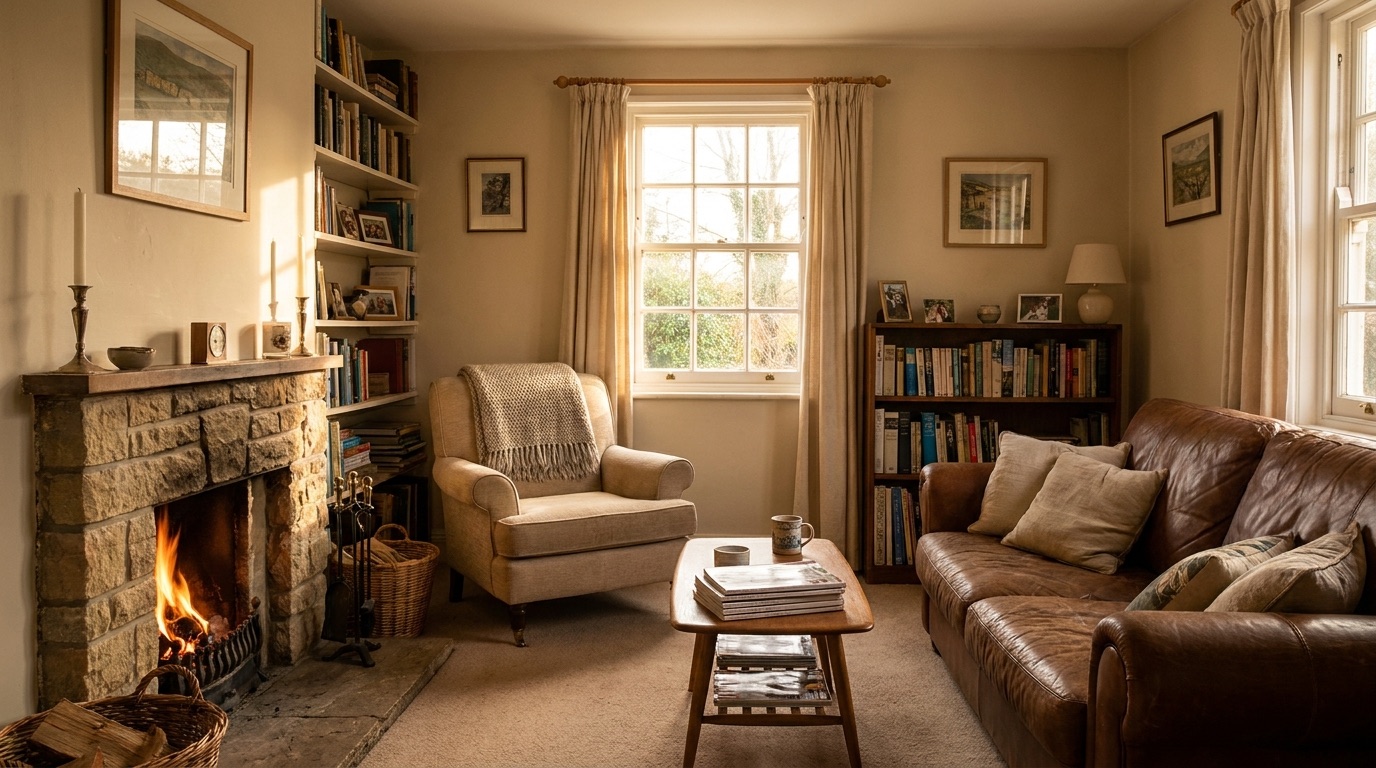
The choice between selling your longtime home and staying put is both a financial decision and a lifestyle one, and the two do not always point the same direction. Your Rhode Island house may be your largest asset and your deepest set of memories at the same time, which is exactly why the honest answer starts with separating the money from the meaning and then looking at both clearly.
I work with a lot of owners in their sixties, seventies, and beyond across Rhode Island and nearby Massachusetts, and almost nobody walks in with a clean answer. Most people feel pulled in two directions. This piece is a framework to slow that pull down and give you a way to reason through it, not a push toward either door.
### What does aging in place actually cost?
People often assume staying is the free option because the mortgage is paid off or nearly so. It usually is not free, and the costs hide in three places.
First, the house keeps aging alongside you. A roof, a heating system, a set of windows, and exterior paint on an older New England home add up to real money over a decade, and those bills do not care what your income looks like in retirement.
Second, there is the cost of modifications. Aging in place safely often means a first-floor bedroom and full bath, a zero-step entry, wider doorways, grab bars, better lighting, and sometimes a stair lift. A modest set of safety updates can run a few thousand dollars. A true single-level conversion or an addition can run into the tens of thousands. These are not optional if your goal is to stay for twenty years rather than five.
Third, there is the cost of help. If staying eventually means bringing in care, that expense arrives on top of the house. Which leads to a Rhode Island specific option worth understanding.
### Can an ADU help me stay, or help me leave?
An accessory dwelling unit can serve both strategies, and that flexibility is why I bring it up with almost every owner over sixty.
If you want to stay, an ADU can house a caregiver, an adult child, or an aide close by while preserving everyone's privacy. If you want income instead, that same unit can be rented to help fund the maintenance and taxes that make staying viable. Rhode Island recently made this far easier to do by right on many single-family lots, and I walk through the specifics in my breakdown of Rhode Island's ADU law.
The honest caveat is that building an ADU is a construction project with a real budget and a real timeline. It is a strong tool, but it is not a quick fix, and it works best when you plan it a few years ahead of when you will need it rather than in a crisis.
### How do I tap my equity without selling the whole house?
If the pull toward staying is strong but cash flow is the problem, you do not always have to choose between all and nothing. There are middle paths, and each has a tradeoff worth naming plainly.
A home equity line of credit lets you borrow against the house while keeping it, but it adds a monthly payment that has to fit a fixed retirement income. A reverse mortgage can convert equity into cash or an income stream with no monthly payment, though it reduces what your heirs inherit and carries fees that deserve a careful read. Renting a portion of the home, including through an ADU, generates income without any new debt at all.
None of these are free money. Every one of them trades future equity or adds obligation today. I am not here to sell you on any of them, only to make sure you know they exist before you conclude that selling is your single option for reaching the value locked in your walls.
### Selling and downsizing: what actually changes?
Selling is not only about the check at closing. It resets your monthly life. A smaller, single-level, lower-maintenance home can cut your utility bills, your property taxes, your upkeep hours, and your physical risk all at once. It can also move you closer to family, to a walkable downtown, or to better healthcare.
The tradeoff is that you give up a known place for an unknown one, and you take on the work and stress of a move at a stage of life when moves feel heavier. That is real, and I never wave it away. The financial upside only matters if the new life feels like yours. Before you weigh any of this, it helps to know your actual number, which you can start with a what your home is worth estimate, and to read my downsizing financial playbook for how the proceeds actually flow.
### How do the two paths compare side by side?
Here is the decision laid out on the dimensions that tend to drive it. Your weighting of each row is personal, and that weighting is the real decision.
| Dimension | Sell and downsize | Age in place |
|---|---|---|
| Upfront cost | Moving, prep, and transaction costs, often offset by proceeds | Modifications and deferred repairs paid out of pocket |
| Equity access | Unlocks full equity at closing | Partial access via HELOC, reverse mortgage, or ADU rent |
| Maintenance burden | Usually lower in a smaller or newer home | Stays with you and grows as the home ages |
| Flexibility | Fresh start, but harder to reverse once sold | Stay now, keep options open, decide later |
| Lifestyle and emotion | New setting, possible loss of roots and community | Familiar home and neighborhood, at the cost of upkeep |
### The emotional side deserves its own line
I want to name this directly because it gets dismissed as soft, and it is not. A home holds decades of your life. Rooms where you raised kids, a kitchen that hosted every holiday, a street where you know every neighbor. Leaving that is a genuine loss, and grief about a house is not irrational.
At the same time, staying out of fear of that loss can quietly trap you in a home that no longer fits your body or your budget. The goal is not to be brave or sentimental. It is to be honest about which feeling is information and which is just inertia. Sometimes the memories are portable and the house is the hard part. Sometimes it is the reverse. Only you can call that, but you should call it consciously.
### A simple framework to decide
When an owner asks me to cut through all of it, I offer four questions in order.
One, the ten-year question. Can this home, with reasonable modifications, safely serve you for the next ten years? If yes, staying is genuinely on the table. If it would take a small fortune or still leave you climbing stairs, that is your answer forming.
Two, the cash-flow question. Do your income and equity tools cover taxes, upkeep, and possible care without strain? If staying only works by ignoring maintenance, that is not staying, that is postponing.
Three, the life question. Does your daily life get better or worse in each scenario, setting money aside? Proximity to family, healthcare, and community all count here.
Four, the reversibility question. Which choice keeps more doors open? Aging in place with a plan often preserves flexibility. Selling is cleaner but harder to undo.
If three or four of those point the same way, you have your answer. If they split, that split is the conversation worth having with your family and with a professional before anyone signs anything.
### Frequently Asked Questions
#### Is it cheaper to age in place or to sell and downsize?
It depends on your home's condition and the modifications you need. Aging in place looks cheaper on paper because there is no move, but deferred repairs and safety updates on an older home can erase that gap. Run the ten-year cost of staying against the net proceeds and lower carrying cost of a smaller home before deciding.
#### Can I build an ADU on my Rhode Island property to bring in income?
Often yes. Rhode Island has made accessory dwelling units far easier to build by right on many single-family lots. An ADU can house a caregiver or generate rent to fund staying. Confirm your specific lot and setbacks against the current rules in my ADU law breakdown.
#### Should I take out a reverse mortgage to stay in my home?
It can work, but read it carefully. A reverse mortgage gives you cash or income with no monthly payment, at the cost of reduced inheritance and real fees. It fits owners committed to staying long term, and it is a poor fit if you may sell within a few years.
#### How do I know what my home is actually worth right now?
Start with a current valuation rather than an old tax assessment or a memory of what a neighbor got. Market conditions in Rhode Island and Massachusetts shift, and your number drives every other choice here. A professional estimate gives you a real figure to plan around.
#### What if my family and I disagree about what to do?
That is common, and it usually means people are weighing the emotional and financial rows differently. Put the framework on paper together, name who is optimizing for what, and bring in a neutral professional. Disagreement is often a sign the tradeoffs have not been made explicit yet.
If you want a clear-eyed read on your specific situation, no pressure and no script, I am glad to walk the numbers and the options with you. Start with a current what your home is worth estimate and we can take it from there.

Written by
David Peterson
David is a real estate agent with Fathom Realty, dual-licensed in Rhode Island (RES.0047177) and Massachusetts (9577507-RE-S). He serves the Providence metro, the East Bay and coastal Rhode Island, and Southeastern Massachusetts, and brings a digital marketing agency background to every listing.
Need a strategy tailored for your family?
As a dual-licensed professional working on both sides of the line, I'll build custom financial models, tax maps, and school evaluations specifically for your objectives.